Lars Franke · 13 October 2026
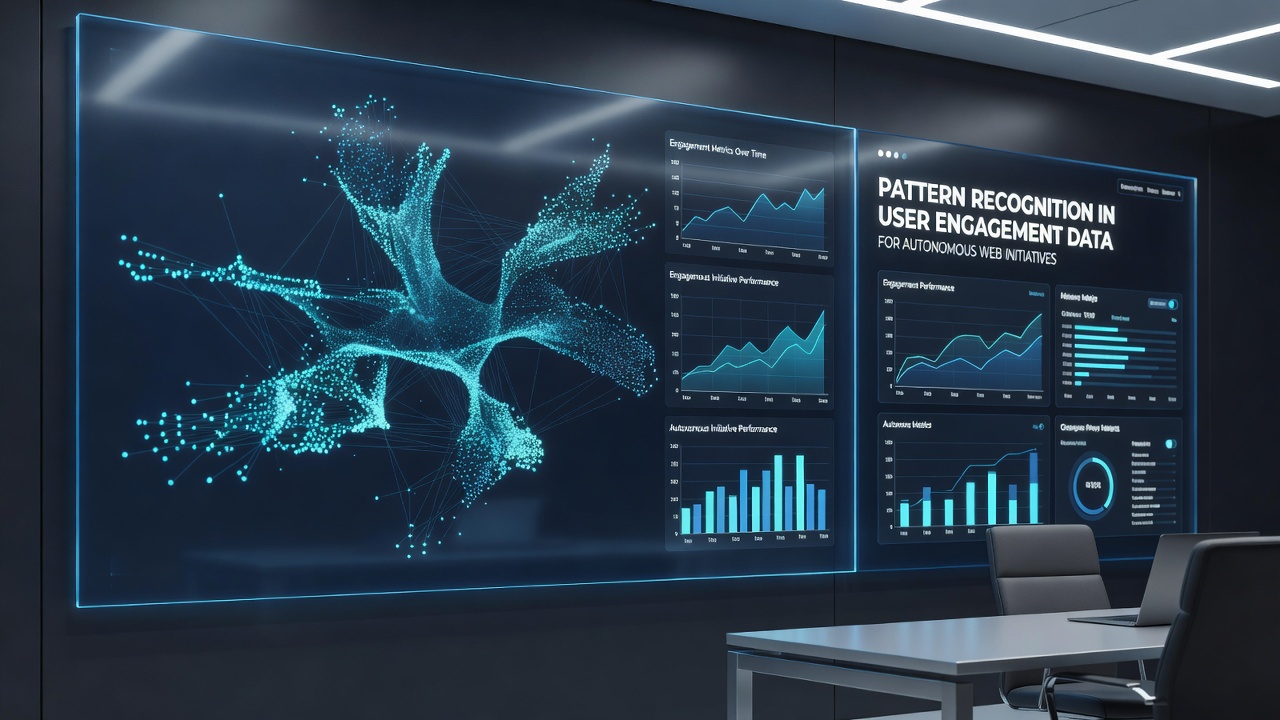
Investigating Pattern Recognition in User Engagement Data for Autonomous Web Initiatives
Autonomous web initiatives rely on pattern recognition to process large volumes of user engagement data, including metrics such as page views, session durations, click paths, and scroll behaviors. These systems apply algorithms that identify recurring structures within datasets collected from website interactions, allowing automated adjustments to content delivery and interface elements without direct human oversight. Research from academic institutions shows that techniques like clustering and neural network-based classification form the core of such recognition processes, where input variables from user sessions get grouped into categories that reveal preferences or navigation habits.
Core Methods in Pattern Detection
Supervised learning models train on labeled engagement records to predict future actions, whereas unsupervised approaches discover hidden groupings in unlabeled data streams. Studies indicate that convolutional neural networks excel at detecting sequential patterns in time-stamped logs, processing sequences of interactions to forecast drop-off points or repeat visits. Data shows that hybrid methods combining decision trees with recurrent networks improve accuracy on mixed datasets drawn from multiple traffic sources, and observers note that real-time processing pipelines handle incoming events through edge computing nodes to reduce latency in autonomous responses.
Feature extraction steps convert raw metrics into numerical representations suitable for model input, with principal component analysis reducing dimensionality while preserving variance across variables like bounce rates and conversion events. Those who have examined deployment logs find that anomaly detection layers flag unusual engagement spikes, triggering content rotations or navigation simplifications in the autonomous framework. In October 2026, ongoing implementations continue to integrate these layers with privacy-preserving computation frameworks that limit exposure of individual user records during analysis cycles.
Data Sources and Collection Practices
Engagement datasets originate from server logs, client-side tracking scripts, adn integrated analytics platforms that record interactions across desktop and mobile endpoints. Organizations aggregate these inputs into centralized repositories where preprocessing routines clean inconsistencies and normalize timestamps for cross-session comparisons. Figures from industry reports reveal that autonomous initiatives often sample subsets of traffic to maintain computational efficiency, selecting representative user cohorts based on geographic distribution and device categories.

External validation comes from sources such as European Commission guidelines on AI-driven analytics, which outline standards for data handling in automated environments, and reports issued by Canadian digital adoption programs that track similar metrics across public sector web properties. These references establish benchmarks for evaluating model performance on diverse user bases.
Implementation in Live Systems
Autonomous web platforms deploy pattern recognition modules that interface directly with content management layers, executing changes such as personalized recommendation blocks or dynamic menu reorganizations based on detected clusters. Engineers configure feedback loops where recognized patterns feed into reinforcement learning agents that optimize for metrics like average session length or return frequency. Data indicates that integration with A/B testing frameworks allows continuous validation of pattern-derived modifications against control variants, and researchers have documented cases where such loops reduced manual oversight requirements by measurable margins in production environments.
Scalability considerations arise when datasets exceed certain thresholds, prompting use of distributed processing frameworks like Apache Spark for batch analysis alongside stream processors for immediate responses. Those monitoring system outputs observe that interpretability tools, including SHAP value visualizations, help administrators review which engagement features drive specific pattern assignments without exposing raw records.
Conclusion
Pattern recognition applied to user engagement data supports the operational independence of web initiatives by enabling data-informed adaptations at scale. Continued refinement of algorithms and data governance practices shapes how these systems evolve through 2026 and beyond, with emphasis on accuracy, efficiency, and compliance across varied deployment contexts.